01 / Inner Atlas
Identity
You may answer “who are you?” differently at work, at home, or with an old friend. Which answer feels closest today?
- Which description of yourself feels useful today?
- What remains when a role is set aside for a moment?
Art, ideas and the beauty of being
A place to enjoy the art, follow a question, and take a fresh look at being alive.
Begin here
BeyondTimelines exists to make the exploration of human consciousness accessible to everyone.
An image, a remembered conversation, a familiar place in different light. There are plenty of ways to begin. Read what interests you, try a short experience, or simply enjoy the artwork.
Everything here is free, independent, secular and noncommercial. You do not need a particular belief, qualification or life story to take part.
Free to explore.Open to everyone.Independent in thought.

A small invitation
Open a random chapter, Atlas destination, artwork or interactive Experience already here.
A Moment of Reflection
What are you curious about today?
Featured collection
See all 47 Transpersonal Images at their original proportions. Stay with one, or let a suggested route lead you to another.
Explore the collectionPermanent creative archive
Start with the artwork, or follow a question about awareness, perception, reality or time. Each pathway includes reading and a short optional experience.
47 original artworks. Open any image full-screen and take your time.
Enter the galleryNot sure where to begin? Try The Observer — a short experience in noticing.
A map of human experience
An old question or a new interest can be a good starting point. Pick a subject that catches your attention. The map offers connections, not conclusions about you. Choose one of six destinations. Each opens a concise reflection with links to a related pathway and suggested gallery route. Explore a chapter in The Journey Within, or exit to Experiences.
Select a destination to begin.
01 / Inner Atlas
You may answer “who are you?” differently at work, at home, or with an old friend. Which answer feels closest today?
02 / Inner Atlas
A thought is running through your mind. Then you notice it. That small shift is a place to begin.
03 / Inner Atlas
Change can begin with a new interest as well as an ending. Something you enjoy may suggest a possibility you had not considered. There need not be one grand explanation.
04 / Inner Atlas
An image from a dream stays with you over breakfast. You can be curious about it without deciding what it means.
05 / Inner Atlas
An event that once seemed minor matters years later. What changed: the event, its place in your life, or the way you tell it?
06 / Inner Atlas
Some days disappear from memory; a small moment stays close for years. Begin with one that comes to mind easily.
You can leave this map at any time. Look around, pause, or choose a different route when you wish.
Your choices remain in this browser session only and are not saved or sent.
At your own pace
No one is checking your answers here. Each experience offers a small question to try for yourself. You can write, look, listen or move on. Private reflections stay in this page and are cleared when you leave.

What catches your eye when you are not in a hurry?
AI-generated landscape illustration, not a photograph by David. Separate from the Transpersonal Images collection.
Three brief prompts about what draws your attention. Choose a word, or simply look and listen. Nothing is saved or sent.
Room to be curious
An old friend remembers you differently. A new interest takes you by surprise. Sometimes a small moment is enough to make you look again.
Nine chapters and four interactive chambers about identity, change and the life in front of us. Begin with what interests you. There is no required order.
Enter The Journey WithinThe Witness
A thought appears. You notice it. What is the difference between having that thought and being aware of it? Begin with an ordinary moment; no special state is required.
Researchers study how people judge their own thinking and how conscious visual experience relates to brain activity. Our short noticing exercises are informal invitations, not measurements of either ability.
You may describe yourself through roles, memories or values. Philosophers ask a different question: what makes you the same person over time? A self-description and an answer to that question need not be the same thing.
A dream can stay with you after waking. A quiet moment can change what draws your attention. You can describe either experience without first deciding what it means.
Optional interactive experience
01 / 03Notice a sound, a colour or a point of contact. There is no need to make the moment unusual.
What did you notice about a thought when you paused before following it?
Your words stay in this page until you clear them or leave. They are never sent.
There is no need to finish. You can look around the room, notice an ordinary object, or leave the exercise. Continue only if it feels useful.
The Lens
A message arrives without a greeting. Is the sender hurried, distracted or upset? The words are visible; the explanation is something you add. Explore where noticing ends and interpretation begins.
In a real-world experiment, some people failed to notice that the person they were speaking with had been replaced during an interruption. Seeing a scene does not guarantee noticing every change in it.
Read the imagined scene below under two different descriptions. Which details feel important in each version? Your response is something to notice, rather than evidence about your personality.
Projection is a historical psychological idea about reading something of ourselves into others. We use it as a question, never as a shortcut for diagnosing a reaction or discovering someone else’s hidden motives.
Optional interactive experience
Context and interpretationImagine someone crossing a sunny square. You cannot yet see their expression.
Imagine the person is a friend arriving. Which details did you add to the scene?
Only the description has changed. This is an imagined scene, not a test of your perception or personality.
Describe one detail from the scene. Then write one thing you inferred. What changed between the two?
Your words stay in this page until you clear them or leave. They are never sent.
There is no need to finish. You can look around the room, notice an ordinary object, or leave the exercise. Continue only if it feels useful.
The Threshold
You and another person witness the same event and remember it differently. What could you check together? What remains a matter of perspective? Start with that difference before asking the larger question of what is real.
A feeling matters to the person having it. Other questions need shared evidence: what happened, who was there, and which details can be checked? Respecting an experience does not settle its explanation.
Does experience depend entirely on the physical world, and what would explain that relationship? Philosophers offer competing accounts. Compare their reasons before treating any one account as an answer.
A closed door might suggest an ending in a story. In an actual corridor it may simply be closed. An image can carry meaning without providing evidence for why an event occurred.
Optional interactive experience
Multiple perspectivesYou arrive at a closed door marked “Please wait.”
What could you check? The words on the sign, whether the door is locked, or instructions from someone inside.
A feeling and an interpretation can matter without establishing what happened behind the door.
What could you check about the door, and what could only the person waiting tell you?
Your words stay in this page until you clear them or leave. They are never sent.
There is no need to finish. You can look around the room, notice an ordinary object, or leave the exercise. Continue only if it feels useful.
The River of Time
A brief wait can feel long; a memory from years ago can feel close. A clock measures duration. This pathway asks how the past, present and future appear in experience.
Research describes remembering as reconstruction rather than playback. A vivid memory can carry important details without being a complete recording. This does not tell us whether any particular recollection is accurate.
Research reviews find overlap between processes involved in recalling past events and imagining possible ones. Building a possible future is useful, but the imagined scene is not a prediction.
Think of a familiar place that has changed. What do you remember, what is there now, and what do you expect next? The three may sit close together in experience.
Optional interactive experience
PastBring to mind a moment that still feels near. Notice only what is available now, without trying to recover more than is there.
There is no need to finish. You can look around the room, notice an ordinary object, or leave the exercise. Continue only if it feels useful.
Transpersonal Images
47 original artworks. Select an image to open the immersive viewer.
Showing all 47 original artworks.
The routes are suggested ways to look, not claims about the meaning of the artwork. All artworks always returns you to the complete collection.
A personal introduction
I’m David G-Morgan, the person behind BeyondTimelines.
For several decades, I’ve been curious about consciousness, self-awareness and the experience of being human. That interest has included formal study in transpersonal psychology and mentoring, alongside writing and creative work.
Photography and aerial filmmaking are part of that curiosity, offering another way to notice light, space and changing perspectives.
I don’t claim to have final answers. BeyondTimelines is a freely accessible place to pause, explore and make room for your own questions.
I’ve owned the BeyondTimelines domain since 2010, although it remained largely dormant for much of that time.
BeyondTimelines is independent, free, noncommercial, secular and nonclinical. There are no paid services here, no clinical advice, and certainly no requirement to agree with me.
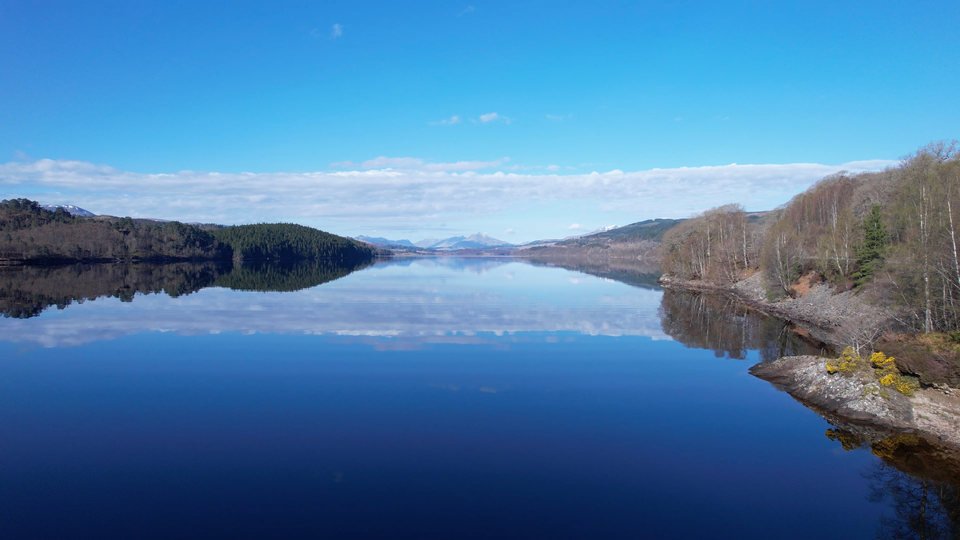


Photography and video stills by David G-Morgan
Read our editorial approachEditorial philosophy
A striking image is not evidence for a theory. A meaningful experience does not settle its cause. We keep research, arguments, personal experience and art distinct, so you can judge what each offers.
What was studied, and what did the evidence show? We link to identifiable studies and reviews, explain their limits, and distinguish findings from the theories used to interpret them.
What does an idea mean, and which reasons support it? Questions about self, mind and reality remain open to argument. Historical theories are identified as such.
What is this like for the person experiencing it? An experience can matter deeply while its cause or meaning remains uncertain. Personal significance does not establish a metaphysical explanation.
An image or imagined scene may bring a question into focus. What you make of it is open. The artwork and exercises do not reveal hidden facts about you.
The approach is secular. Disagree, skip an exercise, or leave a question unanswered.
Sources & further exploration
Here is where the research, arguments and historical influences come from. Each entry explains its use and limits. Being listed here does not make every claim in a source established fact.
Our own writing, artwork and experiences are free to explore. External publications set their own access terms; where possible, we link to public abstracts or readable reference entries. You can use Beyond Timelines without following any external link.
Philosophical inquiry
Robert Van Gulick · Stanford Encyclopedia of Philosophy · 2004; revised 2014
A starting point for the different questions people ask about consciousness. It surveys competing explanations rather than settling them.
Philosophical inquiry
Eric T. Olson · Stanford Encyclopedia of Philosophy · 2002; revised 2023
Distinguishes questions about a person’s self-description from questions about remaining the same person over time.
Empirical research · review
Stephen M. Fleming and Raymond J. Dolan · Philosophical Transactions of the Royal Society B · 2012
Reviews how researchers study the accuracy of people’s judgements about their own performance. These tasks differ from the informal reflection offered here.
Empirical research · review
Daniel L. Schacter and Donna Rose Addis · Philosophical Transactions of the Royal Society B · 2007
Explains memory as a process of reconstruction and examines its relation to imagining possible events. It does not make any particular recollection false.
Empirical research · experiment
Daniel J. Simons and Daniel T. Levin · Psychonomic Bulletin & Review · 1998
An experiment showing that some changes in an interaction can go unnoticed. It concerns visual change detection, not whether reality exists.
Empirical research · review
Dan P. McAdams and Kate C. McLean · Current Directions in Psychological Science · 2013
Examines how people tell and develop life stories. A life story is one approach to identity, not a complete account of every person or culture.
Empirical research · experiment
Cogitate Consortium and colleagues · Nature · 2025
Tests specified predictions from two theories of visual consciousness. The findings challenge aspects of both; they do not resolve consciousness as a whole.
Empirical research · review
Sinéad L. Mullally and Eleanor A. Maguire · Developmental Cognitive Neuroscience · 2014
Examines evidence and open questions about memory in infancy. It does not support recovering birth memories or reading adult destiny from childhood.
Creative interpretation · historical influence
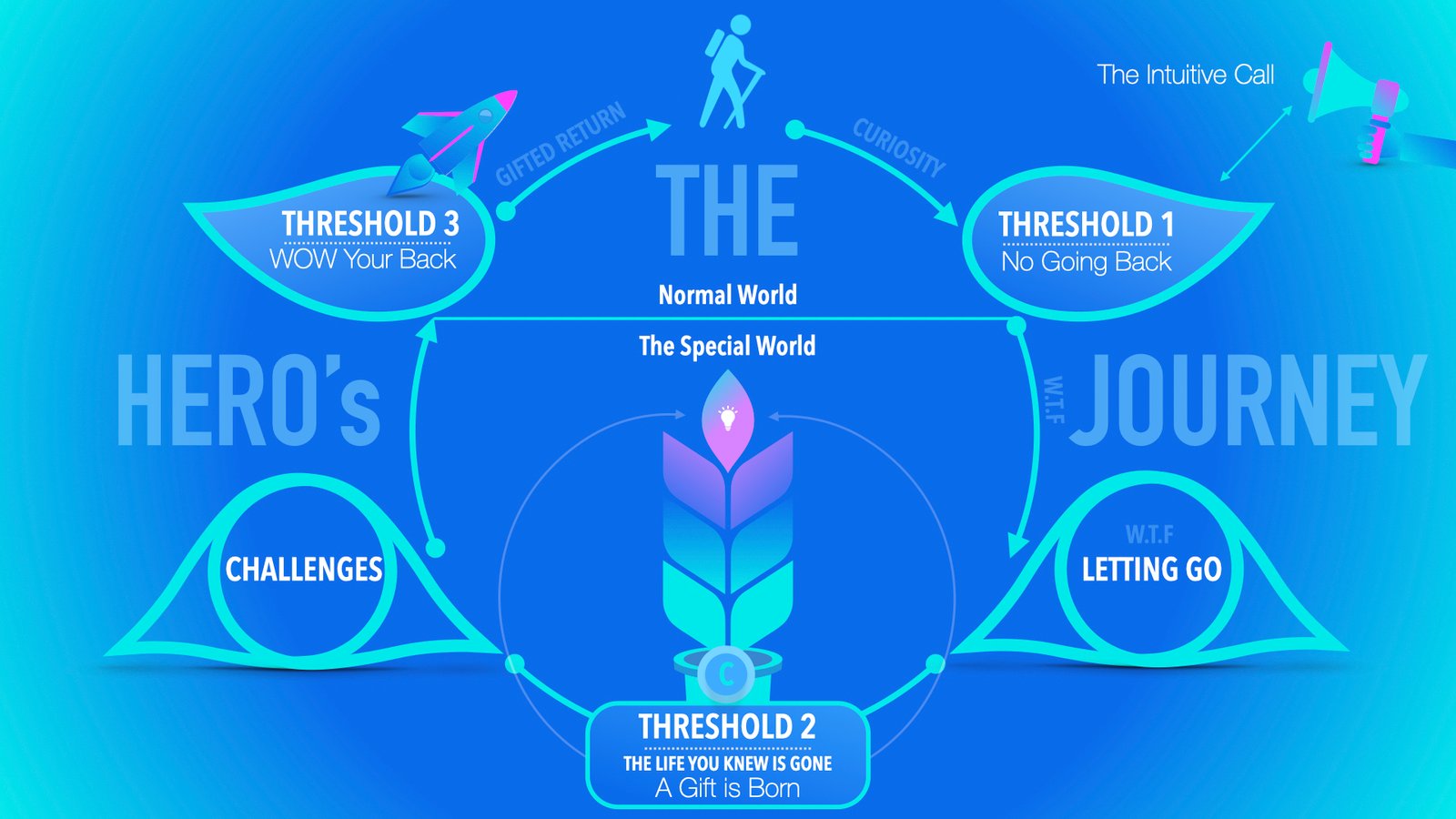
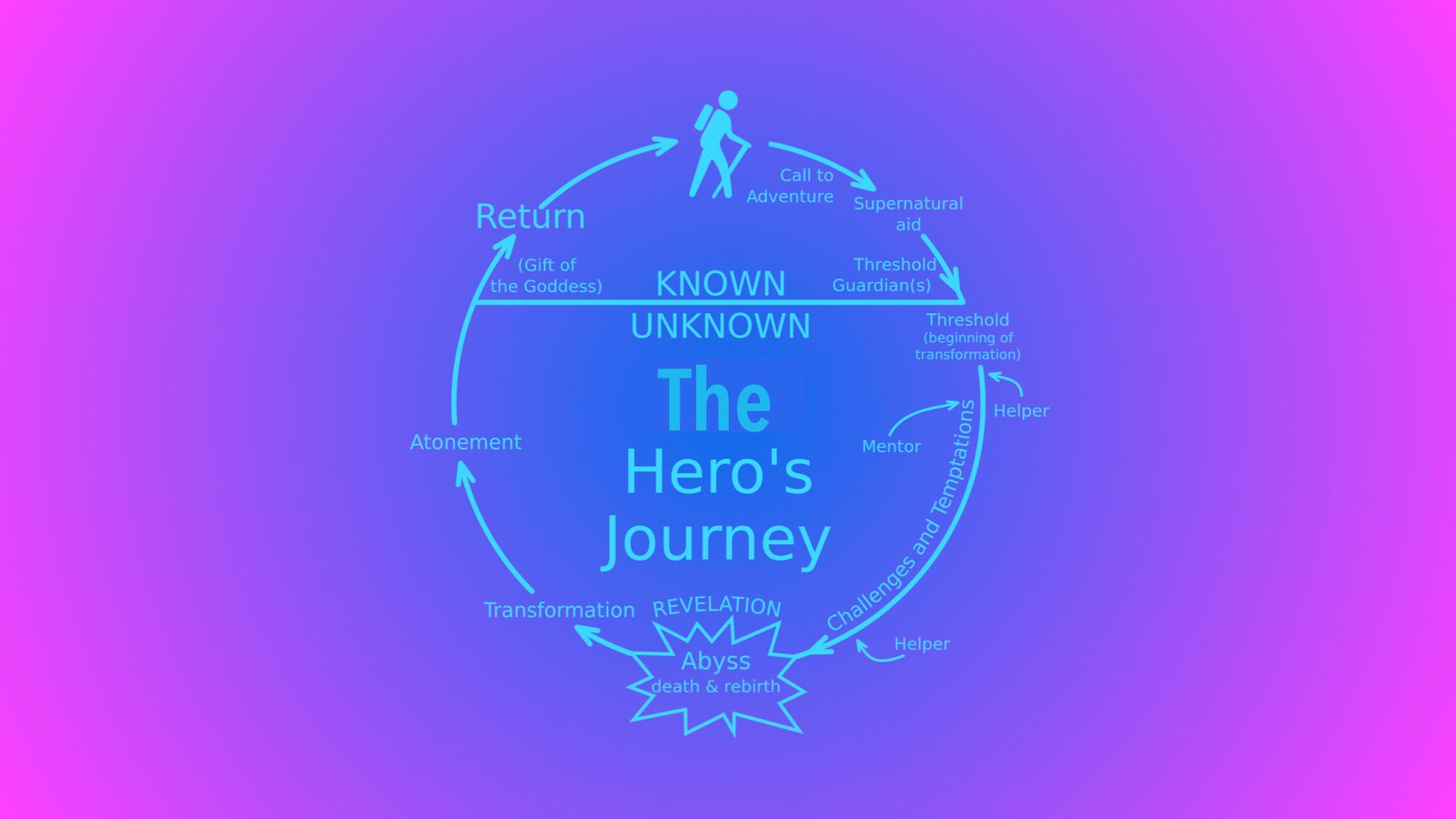
Joseph Campbell Foundation · Foundation learning resource · No publication date displayed
Documents a narrative pattern used as a creative influence in the Journey. Its mythological origins supply no universal rule for human development.
Philosophical inquiry · historical context
Library of Congress · The Red Book of Carl G. Jung exhibition · No page-specific date confirmed
Offers historical context for Jung’s work. It is not an empirical validation of Jungian ideas or a detailed reference for every term used in the Journey.
Philosophical inquiry · contested models
Stanislav Grof · Author’s publications index · Various; index undated
Identifies an existing influence’s publications. The index and author’s claims do not independently establish the models it lists.
Philosophical inquiry · historical claim
Oliver Lodge · Book; bibliographic record at Open Library · 1916
Documents a book in the history of survival claims. The catalogue confirms the publication, not the truth of its claims.
Philosophical inquiry · historical psychological model
Susan Blackmore · Author’s postscript to a 1984 Journal of Parapsychology paper; reprinted in 2009 · 1984 / 2009
Describes one psychological approach to unusual experiences. It is retained as an identifiable perspective, not a complete current scientific consensus.
Foundations review completed 19 October 2026. Verification of a reference does not make every claim in it established fact. Descriptions here are original; no source images or passages are reproduced.
Help us correct or improve a reference12 / Contact
Your enquiry is sent to hello@beyondtimelines.com. No account is required.